The Caribbean: what next?
One Caribbean Nation
All ah we is One
 |
| Professor Tennyson Joseph |
ONE WEEK after the dignified burial
of Barbadian National Hero and
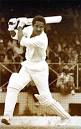
Caribbean cricketing icon Sir Garfield
Sobers, and as the lofty speeches
and uplifting songs of farewell and
gratitude fade away, the Caribbean
must now come face to face with its
harsh existential present. The heaping of praise upon a fallen hero always boomerangs. It goes out buoyed by how great we once were but returns with the pain of how far we have fallen.
Significantly, while the world is
rapidly changing, the Caribbean is
at its most vulnerable state since
independence. Despite this, there
has not been any fundamental self
reflective critical analysis aimed
at determining what next for the
Caribbean. There is little Caribbean
awareness of the scale, depth and
implications of its existential crisis.
Our news and public discourses
continue to be dominated by
electoral partisan contestation,
and our academic analyses remain
trapped in these considerations. If
in normal times such complacency is
problematic, in periods of significant
change, it is always fatal.
Policy responses
In such periods, two responses
become necessary. The first is for
a deep and critical objective economic,
political and socio-cultural analysis
of the world in which the Caribbean
is immersed. This would be the
diagnosis. The second is for
a comprehensive, detailed,
appropriate and sustainable set of
policy responses.
This would be the urgent
and necessary action that any
independent, sovereign, self
actualised, non-colonised people would
undertake. Only a genuinely free people, unafraid of colonial overlords, confident in their capacity, can undertake such steps.
Thus far, there is no evidence that such urgent reflection has taken place in the Caribbean. Our news wires have not informed us of any emergency CARICOM meeting of regional experts aimed at identifying a survival and re-positioning strategy.
There have been no reports of regional academies organising conferences to assess and and discuss relevant policy options. there is no outcry from civil society organisations demanding answers. The taking over of Venezuela and the overt squeezing of Cuba with the Caribbean as helpless onlookers (if not as cajoled participants) provide a clear window into the Caribbean’s future unless a firm decision is taken to actively determine the outcome the Caribbean wishes for itself. Such a course of action requires bucketloads of political awareness but shiploads of sovereign political will to do something about it. The regional experts aimed at identifying a survival and re-positioning strategy.
There have been no reports of regional academies organising conferences to assess and discuss relevant policy options. There is no outcry from civil society organisations demanding answers.
As the United States faces frustration in its wars in Iran, Southwest Asia and Europe, and as it sees its global power weakening with a declining Europe and an increasingly volatile global economy, the Caribbean and Latin America then become the US’ bullying playground. The taking-over of Venezuela and the overt squeezing of Cuba with the Caribbean people as helpless onlookers ( if not as cajoled participants) provide a clear window into the Caribbean's future unless a firm decision is taken t to actively determine the outcome the Caribbean wishes for itself.
Such a course of action requires bucketloads of political awareness but shiploads of sovereign political will to do something about it. The Caribbean people and leadership can never be faulted with not knowing or understanding the world in which they live. One must only listen to Barbados’ Prime Minister Mia Amor Mottley to see this clearly. But, political will? We continue to wait in hope, rather than expectation.
Tennyson Joseph is Associate Professor of political science at North Carolina Central University.
Email tjoe2008@live.com


Comments
The graphics are in keeping with the name of the of the Blog.
Well done once again!
Continue with your GREAT work.
Always inspiring articles.