One Caribbean Nation. Kamla – slide to irrelevance Professor Tennyson Joseph Kamla – slide to irrelevance CARIBBEAN PEOPLE are not often afforded the privilege of witnessing the inevitable slide towards irrelevance, in slow motion, of a key regional figure. Thus, when it occurs, it should be grasped as a precious teaching moment. The “independence” day speech by Prime Minister of Trinidad and Tobago Kamla Persad-Bissessar as well as her public interventions in the preceding months, has presented such a moment. Political leadership, by its very definition, implies greater levels of intellectual sophistication and articulation than that of the ordinary citizen. Ordinary citizens may be forgiven for “talking foolishness” but the political leaders cannot. If Persad-Bissessar hoped that her “I’m cool with colonialism” independence speech would have shock value, she failed miserably. No one was surprised. Since Donald Trum...
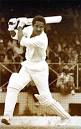
One Caribbean Nation. Sir Garfield Sobers There is, or at least was, a picture of Sir Garfield Sobers, in the hall of the Bay Primary School, located in Bayville that most of us will recall was once called Bayland. The striking aspect of the picture is that Sir Garry is standing there with bat in hand, it appeared to us that he is batting slightly outside the leg stump. In other words, all of his stumps were exposed. Many young boys have stared at this picture for years trying to figure out how Sir Garry could “move so fast” to avoid his stumps being uprooted. In those days, we argued whether that stance was genuine or if it was merely done for the cameras! He is perhaps the only sports man, whose exceptional talents have not been surpassed by any in his sport, and who remains unchallenged , as the greatest allround cricketer to have ever played the game. Sir Garry has walked with Kings and Queens but has never lost the common touch. The entire Caribbean region, has not pr...
One Caribbean Nation. By William Skinner Me and V: a personal introduction to gay tolerance I must have been around nine or ten years old. V was a well-known gay citizen, who lived in my beloved hometown of Britton’s Hill, in the parish of St. Michael, Barbados. My earliest recollection of V was his apparent penchant for dressing in white. I seldom saw him in a long pants, and he walked with an amazing rhythm. Even at that early age, I realized that he was very effeminate. He always seemed busy out and about in the Brittons Hill area and it was obvious that everybody knew him, and his notoriety was island wide. I also noticed that he was always exceptionally clean. Later, I would learn that he was also known as a popular pudding and souse vendor, who carried on his trade in the vicinity of Nelson Street, in the city. He was well loved and respected in Britton’s Hill; along with that respect came good-natured heckling. One day, around midafternoon, about three of my chil...



Comments