One Caribbean Nation. Kamla – slide to irrelevance Professor Tennyson Joseph Kamla – slide to irrelevance CARIBBEAN PEOPLE are not often afforded the privilege of witnessing the inevitable slide towards irrelevance, in slow motion, of a key regional figure. Thus, when it occurs, it should be grasped as a precious teaching moment. The “independence” day speech by Prime Minister of Trinidad and Tobago Kamla Persad-Bissessar as well as her public interventions in the preceding months, has presented such a moment. Political leadership, by its very definition, implies greater levels of intellectual sophistication and articulation than that of the ordinary citizen. Ordinary citizens may be forgiven for “talking foolishness” but the political leaders cannot. If Persad-Bissessar hoped that her “I’m cool with colonialism” independence speech would have shock value, she failed miserably. No one was surprised. Since Donald Trum...
One Caribbean Nation HISTORIC APPOINTMENT PANAMA CANAL GETS FIRST FEMALE CHIEF Naval engineer Ilya Espino de Marotta takes the helm Monday as the first woman to lead the Panama Canal administration, stepping into the role at a challenging time for the vital maritime route. Buoyed by her leadership of the multi-billion-dollar expansion project last decade, Espino moves up from deputy administrator to take full command of the canal. Only three other Panamanians have held the position since the United States handed over the interoceanic waterway in late 1999. Her appointment to the canal's top post is already seen as a symbol of women's capability for executive leadership roles in the industry. The canal serves as the engine of the Panamanian economy and handles nearly three per cent of global maritime trade. Shortly before taking office, Espino told The Associated Press that her priority would be advancing the project to build a reservoir on the Indio River within the canal...
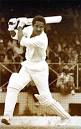
One Caribbean Nation. Sir Garfield Sobers There is, or at least was, a picture of Sir Garfield Sobers, in the hall of the Bay Primary School, located in Bayville that most of us will recall was once called Bayland. The striking aspect of the picture is that Sir Garry is standing there with bat in hand, it appeared to us that he is batting slightly outside the leg stump. In other words, all of his stumps were exposed. Many young boys have stared at this picture for years trying to figure out how Sir Garry could “move so fast” to avoid his stumps being uprooted. In those days, we argued whether that stance was genuine or if it was merely done for the cameras! He is perhaps the only sports man, whose exceptional talents have not been surpassed by any in his sport, and who remains unchallenged , as the greatest allround cricketer to have ever played the game. Sir Garry has walked with Kings and Queens but has never lost the common touch. The entire Caribbean region, has not pr...


Comments